
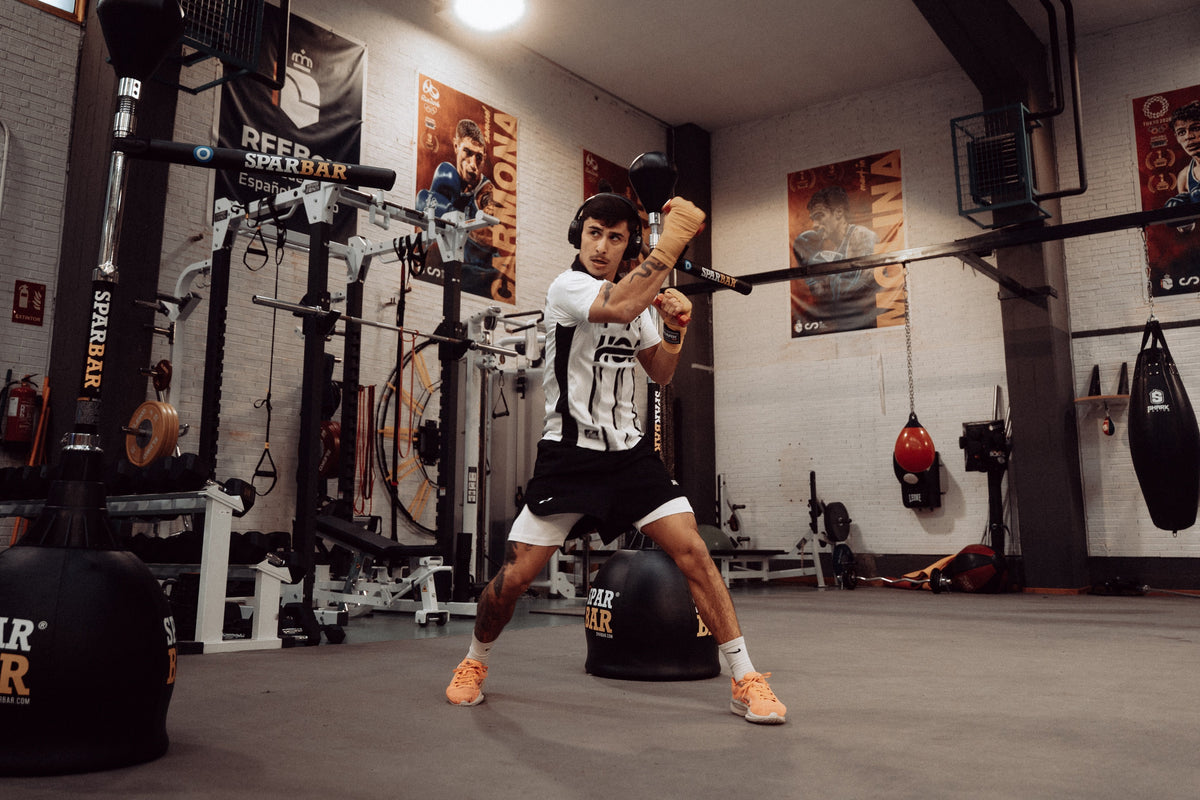
What to Wear to Your First Boxing Class
Nobody decides to start boxing and then worries about what to wear. That part arrives later, usually the night before, when it occurs to you that you have no idea whether a boxing gym is the kind of place where people turn up in whatever they own.
It is. The unwritten rules about what to wear to a boxing gym are shorter than almost anyone expects, and if you're wondering what to wear to boxing class, the answer is very probably already in a drawer at home. The useful version of this question isn't what to buy. It's which of the things you own will stay out of your way through the session.
The short answer
A T-shirt you don't mind sweating through, shorts or leggings you can move in, and footwear your gym allows on the floor. That's the whole list. Nothing on it needs buying, and nothing about it marks you out as new.
Bottoms you can move in is doing some work in that sentence, so it's worth being concrete: you should be able to take a long stride and drop into a stance without the fabric stopping you or riding up. Most training clothes already clear that bar. Jeans and anything structured don't.
The part you can't work out from home is what your own gym expects you to turn up in. Dress rules vary from one gym to the next, and footwear is one area where they can vary. A message before you go, or two minutes on the gym's own information, settles it, and it's probably the single most useful thing you can do the night before.
Everything after that is preference, and it comes down to the two decisions people genuinely hesitate over: how loose you want your top, and what to wear below the waist.
Tops: relaxed or more fitted
This is a preference, not a performance decision. A relaxed top and a closer-cut top will both get you through a first class, and anyone telling you that one of them will make you move better has something to sell. The reason the question feels bigger than it is: you're picturing a room full of people who already know what they're doing, and assuming they arrived at a consensus. There isn't one uniform answer; people train in different fits.
Hall of Fame makes both, which is a convenient way to describe the axis. The Oversized Tee has a wider, more relaxed fit. The Performance Tee is more fitted than the Oversized Tee. Both are suitable for training. The choice between them is about which one you'd rather have on.
When a relaxed cut may suit you
If loose T-shirts are what you wear the rest of the week, this is the uncomplicated option. The Oversized Tee is less technical, and it's more versatile for lifestyle and everyday wear, which matters if you'd rather own one shirt than two.
That's the case for it, and it's a preference case. A relaxed cut isn't going to change anything that happens in the class.
When you may prefer a more fitted option
If the rest of your training kit already sits closer to the body, whether that came from running, lifting or anything else, you'll probably want the same on a first night. The Performance Tee is more fitted than the Oversized Tee, and it's also suitable for training. That comparison is the difference between them, and it isn't a ranking.
Wearing the closer cut won't sharpen your footwork, and it's unlikely anyone will read anything into it either way.
Bottoms: what matters below the waist
There's one practical thing to get right below the waist, and it's the same whatever the gym: the fabric shouldn't be the reason you can't move. Boxing asks more of your legs than most people expect on a first night, and anything that restricts the knee or the hip will announce itself early.
Running shorts, training shorts, leggings and tracksuit bottoms can clear that bar if they let you move freely. What tends to get in the way is a stiff waistband, deep open pockets that swing, or a hem long enough to catch under your heel when you step backwards. Put the thing on at home and take a few long steps in it; you'll notice quickly. Keys and phone go in your bag rather than a pocket.
What a 2-in-1 construction is
Look at boxing shorts for five minutes and you'll meet the term 2-in-1. It's worth knowing what it describes, because it names a construction rather than a promise, and those are easy to confuse when everything on a product page sounds like a benefit.
In Hall of Fame's 2-in-1 Boxing Shorts, the outer layer is a boxing short. The inner layer is a compression mesh layer. The waistband is elastic, and fit is adjusted with a drawstring. That's the full description, and it's deliberately the full description: it tells you how the garment is built, not what it's going to do for you.
What it doesn't settle is what you wear underneath. That's your call, and this article isn't in a position to make it for you.
Footwear: check before you buy
Footwear is the one item here that isn't entirely your decision. Gyms differ on what they allow on the floor, and some are specific about it. Ask before your first session, or check whatever the gym publishes.
If the gym confirms that ordinary indoor trainers are acceptable, wear a pair you already own. What's worth avoiding is buying boxing shoes on the assumption that they're required. Whether you eventually want a dedicated pair is a question for later, once you know how often you're going and what your gym expects.
What to leave at home
A first boxing class outfit tends to go wrong in small ways rather than large ones: something you keep adjusting, something you'd rather not have sweated through, something you're worried about losing. Wear something simple you're happy to train in, and leave anything valuable or fiddly in your bag rather than carrying it onto the floor, jewellery and accessories included. Gyms set their own policies on what can be worn while training, so if you're unsure about a specific item, ask.
The other thing worth leaving behind is the idea that any of this is being assessed. Most people in the room are focused on their own session, not on your kit.
If you decide to buy something later
None of the above needs replacing before you start, and buying in advance is how people end up owning equipment for a hobby they tried twice. Go first. Once you've trained enough to know what you actually prefer, and what actually bothers you, you'll have a far better basis for a decision than a product page and a good intention.
When you get there, the same two decisions come back. On top, the Oversized Tee has the wider, more relaxed fit and the Performance Tee is more fitted than the Oversized Tee; both are suitable for training. Below, the 2-in-1 Boxing Shorts are the construction described above: the outer layer is a boxing short, the inner layer is a compression mesh layer, the waistband is elastic and fit is adjusted with a drawstring.
That's most of what there is to say about boxing clothes for beginners. The equipment conversation gets more interesting later, when it's about what your gym expects you to own rather than what you wear. Clothes are a five-minute decision that stops mattering once the session starts.
